

Spring has sprung!
After three months of winter, it seems like spring will never come – but it’s well worth the wait. It’s the best time to explore Missouri’s outdoors – especially in forests, where wildflowers flourish.
With the bluebird sky you’ve waited for all winter, Missouri’s state tree – the dogwood – in glorious bloom, and redbuds splashing color all over the woods, it’s tempting to spend your hike looking up. But, oh, the beauty you’ll miss!
Native Missouri Wildflowers
The earliest blossoms are called ephemerals – something that lasts for a very short time. Look closely to find them nestling near the woodland floor. Many early spring wildflowers are delicate shades of white: dogtooth violets, Dutchman’s breeches, spring beauty, white trillium and violets (which have white and blue varieties). There are also blues and purples: spiderwort, wild sweet William and Jacob’s ladders. Pinkish wild geraniums are an exciting find.
Missouri conservation areas and state parks are some of the best places to see wildflowers. Conservation areas offer mostly untouched natural areas while state parks offer amenities like staff-lead programs about wildflowers.


If you don’t know where to begin your spring wildflower walk, we have you covered. We asked experts with the Missouri Department of Conservation for their recommendations.
Where to Find Wildflowers
For ephemeral spring flowers, go browsing late March through May in these locations:
Central Missouri
- Rudolf Bennitt Conservation Area – Explore the mostly gentle 3,575 acres, which is 75 percent forested. Fields of upland native warm-season grasses and bottomland fields are scattered among the forests.
- Spring Creek Gap Conservation Area – This 1,816-acre area is a combination of forests, woodlands, steep topography, dolomite glades and old fields, is an extremely scenic area. The forest has a nice display of Missouri wildflowers in the ravines.
- Burnt Mill Cave Conservation Area – The area consists of 340 acres of oak-hickory woodlands and glades. In addition to Spring wildflowers, it is a great locations for bird watching, fishing, hiking, hunting, and wildlife viewing.
- Big Buffalo Creek Conservation Area – Features an Ozark-forest habitat perfect for spring wildflowers.
- Bennett Spring State Park – A wonderful place to see wildflowers. The park often hosts free wildflower programs to visitors.
Northeast Missouri
- Julian Steyermark Woods Conservation Area – This 73-arce wild are is known for thick wildflowers and ferns.
- Engelmann Woods Natural Area – Great for celandine poppies, trillium, bellwort, blue and yellow violets in April and early May.
- Busch Conservation Area Fallen Oak Trail – Features impressive stands of Dutchman’s breeches, bloodroot and trout lily in April.
- Union Ridge Conservation Area -This 8,262-acre area is a mosaic of woodlands, grasslands, old fields, prairie, savanna, and forest. Characteristic species such as big bluestem, little bluestem, pale purple coneflower, prairie clover, and leadplant are now flourishing, increasing the aesthetic appeal and wildlife value of these habitats.
- Dr. Edmund A. Babler State Park – The park is a natural oasis with mature forests brimming with opportunities to see wildflowers. Stop by the welcome center to inquire about a species checklist.
Northwest Missouri
- Burr Oak Woods Nature Center – Provides forest and woodland trails showcasing some of the earliest spring wildflowers and emerging ferns.
- Bluffwoods Conservation Area – Offers woodlands filled with early-spring flowers like May apples and later-spring orchids.
- Crowder State Park – This state park is a prime location for wildflowers. Its rich river bottomlands are accented by stands of cottonwood, river birch, silver maple and sycamore trees that shade a valley floor where the rare ostrich fern grows in company with carpets of swamp buttercups, touch-me-nots, sweet Williams and Dutchman’s breeches. On well-shaded sandstone ledges, carved by the Thompson River, lady slipper orchids and maidenhair ferns cling to a delicate existence.
Southeast Missouri
- Millstream Gardens – Enjoy flowering dogwoods, redbuds and woodland wildflowers in spring at in Madison County between Arcadia and Fredericktown.
- Amidon Memorial Conservation Area – A 1,630-acre area located on the upper reaches of the Castor River. The forest’s timber species range from mixed hardwoods to shortleaf pine to cedar glades making it a great place to look for spring wildflowers.
- Cape Girardeau Nature Center has pristine native wildflower gardens and offer native plant programs during spring and summer.
- St. Francois State Park might be one of the most popular state parks for viewing bluebells. Many rare northern plants continue to thrive in moist, sheltered conditions of the park’s fens.
For more information on Missouri wildflower identification visit, the Missouri Department of Conservation‘s Field Guide.
What Else is Blooming in Missouri?
- Tulip Festival – Showcasing more than one million tulip blooms and happens each April at the Fun Farm in Kearney, Missouri.
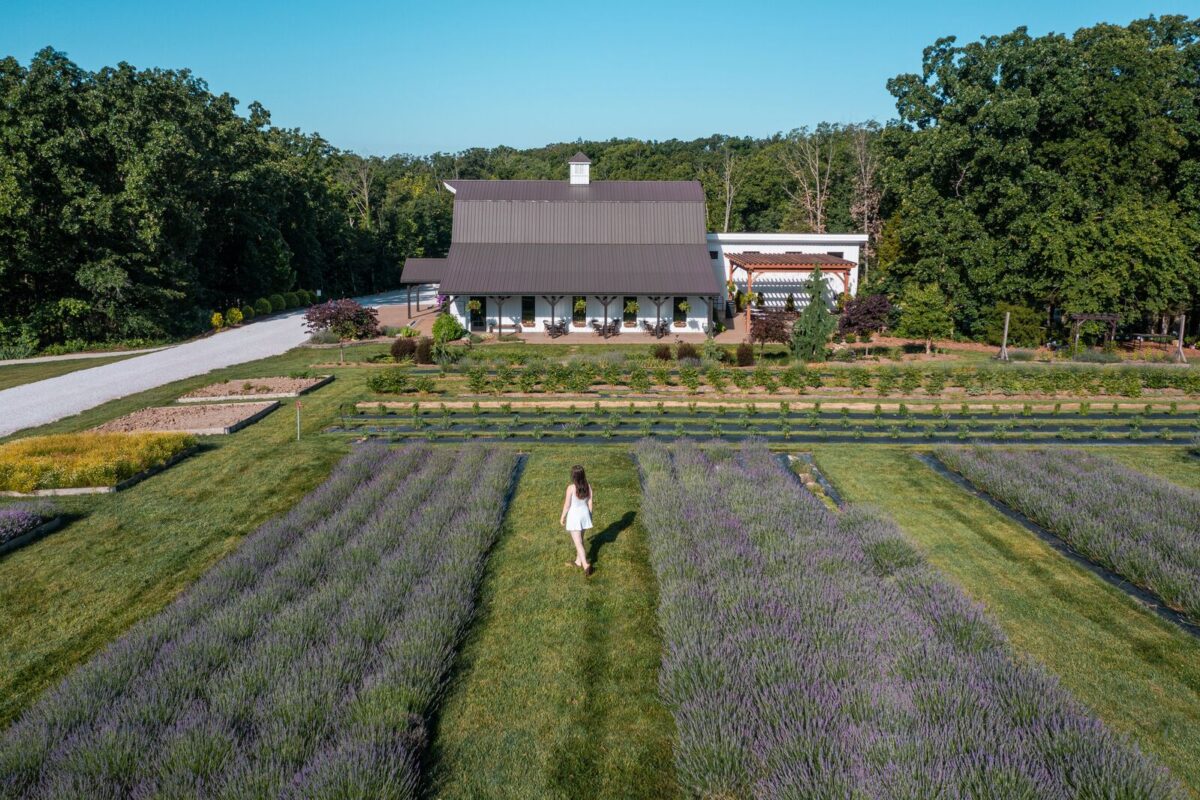
- Long Row Lavender – Relax and smell the lavendar. This family-owned serene spot offers U-Pick seasons, farm workshops, the cutest shop with homemade balms, body butters, and cafe for lunch and coffee.
- The Flower Festival – Happening April 12-13, 2026 at Baker Creek Heirloom Seeds. Wander the gardens, shop more than 150 vendors, learn from speakers, and enjoy live entertainment.